Qui SOMMES-NOUS ?

Notre vision chez PACCT for sustainability
Chez PACCT, nous fusionnons l'innovation et l'engagement 
environnemental pour redéfinir les modèles économiques européens.
Notre objectif est clair : transformer les pratiques commerciales traditionnelles en solutions durables et centrées sur le service, plutôt que sur le volume.
En intégrant l’économie de la fonctionnalité au cœur des affaires, nous visons à créer un impact positif tant pour la société que pour l'environnement.
Notre force : la communauté
PACCT est avant tout une communauté collaborative. 
Notre conviction repose sur la puissance de la coopération et du savoir partagé.
PACCT for sustainability s'établit comme un carrefour où entreprises, experts, et penseurs innovants convergent pour échanger, apprendre et co-créer. 
Chaque webinaire, atelier, ou projet, comme notre livre blanc, est un pas vers une économie plus adaptée aux enjeux de notre époque.
Notre mission est de soutenir des pratiques qui non seulement prospèrent, mais qui contribuent aussi au bien-être collectif.

Nos PARTENAIRES

Au cœur de l'initiative PACCT for Sustainability, nous sommes unis par la volonté de façonner une économie européenne durable. Michelin, Xarvio-BASF et Johnston Circular apportent non seulement leur expertise, mais aussi une dynamique d'innovation qui est le moteur de notre projet. 
Avec l’appui de l’ADEME, notre alliance trouve un écho dans les institutions publiques et bénéficie d'un cadre stratégique pour nos actions. Ensemble, nous nous engageons à promouvoir des pratiques qui marient activités économiques et responsabilité écologique, en poursuivant le développement de services qui sont au cœur de la transition vers une économie circulaire et robuste.

L'ÉQUIPE

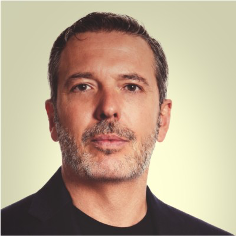
François JOHNSTON
Président de 
Johnston Circular

Porte-parole de la communauté 
PACCT for sustainability
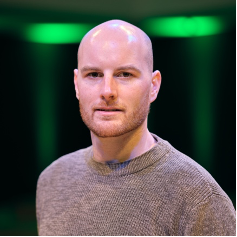
Gurvan GUENNEC
Chef de projet 
PACCT for sustainability

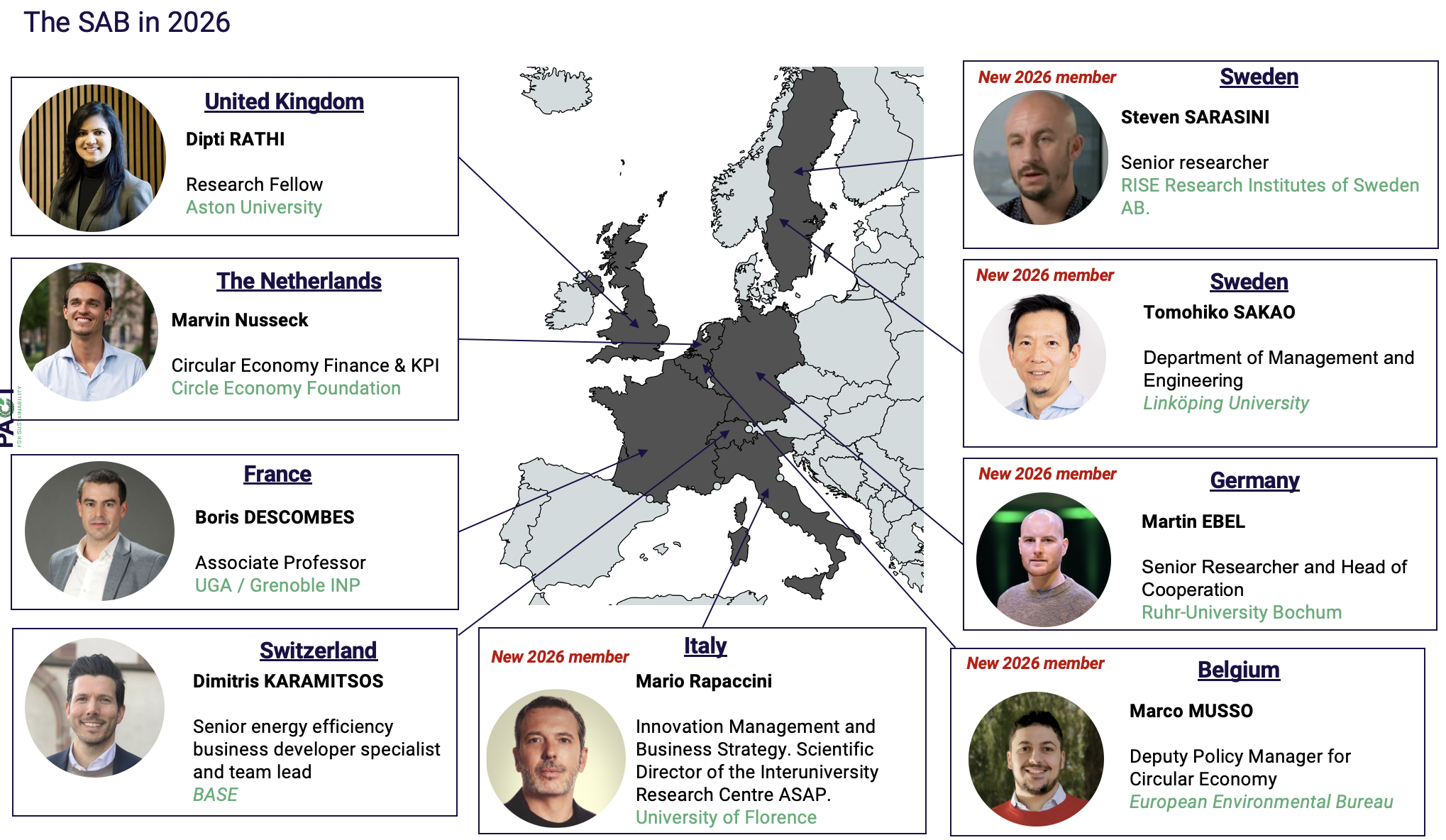
The Scientific Advisory Board

SAB members

Dimitris Karamitsos

Senior Sustainable Finance & Energy Efficiency Business Developer Specialist at the Swiss organisation Basel Agency for Sustainable Energy (BASE).
With more than 15 years of professional experience in the field of energy, entrepreneurship and sustainable technologies, Dimitris has experience in business model innovation, financial mechanisms, valuation principles and project execution.
Within BASE, Dimitris plays a key role in accelerating the deployment of Servitisation worldwide, including the Cooling as a Service (CaaS) and Efficiency as a Service (EaaS) models.
Dimitris is part of the founding team of the Servitisation for Energy Transition (SET) Alliance – aiming to further engage both private and public markets to adopt the model and accelerate the path to a more climate resilient and circular future. He holds an MEng Mechanical Engineering from Imperial College and an MSc of Management, Technology and Economics from ETH Zürich.

Marco Musso

Marco Musso, Deputy Policy Manager for Circular Economy, European Environmental Bureau
Marco leads EEB work on circular economy and fiscal reform, focusing on economic instruments for the green transition as well as on policies to prevent packaging waste and plastic pollution.
He has extensive experience in environmental policy and public affairs, with a focus on circular economy. Before joining the EEB, he worked on circular economy and environmental policies as Public Affairs and Communication Manager for the European Organisation for Packaging and the Environment. Previously, he worked in the European Parliament for a Member of the Environment, Public Health and Food Safety Committee.
He holds a double-degree Master of Science in European Governance from Utrecht University and the University College of Dublin, and a Bachelor in International studies, Development and Cooperation from the University of Turin.
European Environmental Bureau: The EEB is the largest network of environmental citizens’ organisations in Europe. It currently consists of over 190 member organisations in 41 countries, including a growing number of networks, and representing some 30 million individual members and supporters.
Marvin Nusseck

Marvin Nusseck is a seasoned expert at the intersection of the circular economy and the financial sector, with over eight years of experience in economics, stakeholder engagement, and strategic solution development.
He leads the finance & economics programme at Circle Economy and as the founder of the Circularity Exchange Network, he has for the first time successfully brought together leading international financial institutions and facilitated collaboration among major Multilateral Development Banks on circular economy finance. He is part of the project office and helped initiate the Dutch financial sector working group on the circular economy. As initiator of the Circularity Gap Report Finance—the first of its kind—his team has pioneered the quantification of global financial capital flows driving the circular economy.
Marvin has contributed to key initiatives such as the ISO Circular Economy standards (ISO 59004), the EU’s reporting framework CSRD E5, the Global Impact Investment Network’s Waste Management & Circularity framework, the Global Circularity Protocol, IFC’s harmonized circular economy finance guidelines and multiple UNEP-FI publications on circular economy, resource management, and waste. His expertise is further grounded in years of experience in the electronic equipment waste sector.
He holds an MSc in Political Economy from the University of Amsterdam.

Boris Descombes

"Building on nearly a decade of entrepreneurial experience combining strategic vision and operational rigor, I am an Associate Professor and Researcher in digital transformation and business model innovation at the University of Grenoble (France). Within the Regen Lab Research Chair (Grenoble INP Foundation), I investigate how manufacturing firms redesign their business models to achieve both sustainability and long-term competitiveness. My expertise centers on servitization, Product-as-a-Service strategies, digital value architectures, and sustainable business model innovation. I have led and contributed to collaborative research projects with major industrial corporations, developing actionable frameworks that support large-scale transformation. Through my work, I am committed to connecting cutting-edge academic research with higher education and concrete industrial implementation."

Tomohiko Sakao

Tom Sakao has been with Linköping University, Sweden, since 2007 (began as an Environmental Professor), after a total of eight-year, full-time work at Mitsubishi Research Institute, Inc., Tokyo, Japan, and two-year, full-time research work at Darmstadt University of Technology, Darmstadt, Germany (as a Humboldt Research Foundation Fellow). Recognized as the most or the second most productive knowledge developer in product/service systems in the context of sustainability by many review articles authored by other research groups. The impacts of his work include the changes made through implementing innovative methodical approaches and tools in design and R&D of several large multi-national manufacturing organizations. Elected secretary for Scientific Technical Committee Design of CIRP (The International Academy for Production Engineering).

Mario Rapaccini

Professor of Business Strategy and Innovation Management at the School of Engineering of the University of Florence, with +20 years of research on servitization, Product-Service Systems (PSS), and digital transformation of manufacturing firms. I am the Scientific Director of ASAP Service Management Forum, an Italian inter-university network on servitization of industrial firms. I have led numerous research projects on sustainable business impact, resilience, and service platforms. Author of 130+ publications and highly cited works on servitization, I regularly collaborate with global companies to support the transition toward sustainable PSS and service-led growth. List of publications.

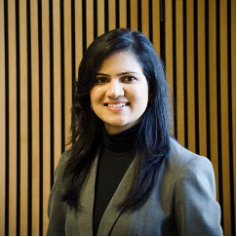
Dipti Rathi

Dipti is a Research Fellow at The Advanced Services Group (ASG), Aston Business School. Dipti’s research expertise lies in servitization, advanced services, and service networks. She completed her industrial PhD, where she examined uncertainty in advanced services from the perspective of service network actors. Dr Rathi’s thesis generated actionable insights for the industry and helped to bridge the gap between academic research and practical application. At The Advanced Services Group, she is passionate about creating a sustainable ecosystem of servitization enthusiasts and enabling firms to unlock the value of service-led growth. Before her PhD, Dipti worked as a Business Analyst and holds a degree in engineering.

Martin Ebel

Martin Ebel is postdoctoral researcher at the Center for the Engineering of Smart Product Service Systems (ZESS) at Ruhr-Universität Bochum. He earned his PhD with a focus on smart service innovation. Today, he plays a key role in establishing the interdisciplinary research center ZESS at Mark 51°7, Bochum's new transfer campus. In this capacity, he guides interdisciplinary research projects centered around smart product-service systems and digital servitization.
Martin has published in peer-reviewed conferences, including HICSS, ECIS, and ICIS, as well as in reputable journals such as Electronic Markets, Computers in Industry, and the Journal of Cleaner Production. His research focuses on service design, the circular economy, and the transformation of manufacturing through (digital) servitization. Alongside his academic pursuits, he works part-time in the industry-having served on the global field team at TK Elevator and currently working at Gebr. Becker in Wuppertal.

Steven Sarasini

Steven Sarasini is a researcher at RISE Research Institutes of Sweden, specialising in product as a service, circular economy, sustainable business models and socio-technical transitions. His work focuses on how firms, users and ecosystems can bring about sustainable transitions through circular products, services and business model innovation. Steven currently works on topics including the adoption of circular business models, product as a service, and decision support for sustainability. His research has contributed to influential work on business models in transition theory, product-level circularity metrics, and the sustainability impacts of product as a service.
For a full list of publications, see: https://scholar.google.se/citations?hl=en&pli=1&user=JqsCwRcAAAAJ